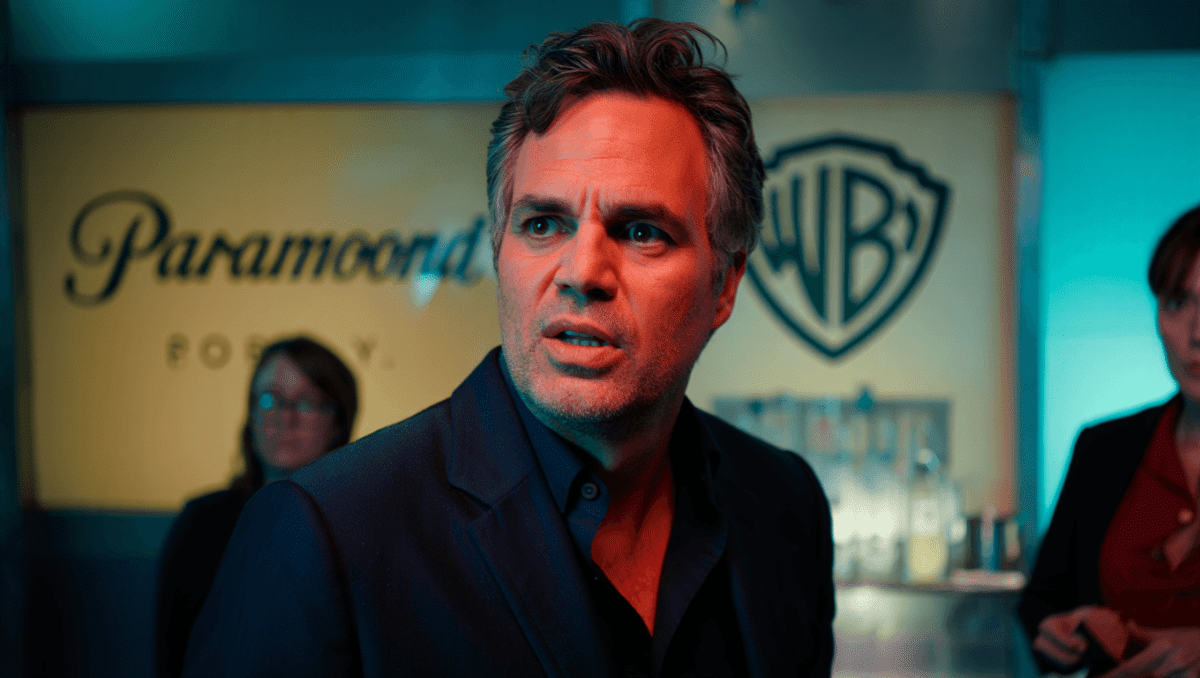
Mark Ruffalo just joined 1,000+ Hollywood stars in a shocking stand against the $110 billion Paramount-Warner Bros merger. Today, the entertainment industry delivered its loudest message yet: consolidation threatens everything.
🔥 Quick Facts
- Who Signed: Major stars including Ruffalo, Jane Fonda, Joaquin Phoenix, Kristen Stewart, Ben Stiller, and more than 1,000 total
- What It Is: Open letter opposing the $110 billion Warner Bros Discovery merger with Paramount
- Timeline: Letter released April 13, 2026, merger targets Q3 2026 closing
- Main Concern: Deal would reduce major U.S. film studios from five to just four, crushing competition
Why 1,000+ Stars Said No to This Merger
Mark Ruffalo and Jane Fonda joined the massive opposition because the deal threatens creative freedom in Hollywood. The open letter warns that consolidation has already weakened the industry, reducing films produced and narrowing the stories that get funding. This merger would make it worse. Fewer studios mean fewer opportunities for directors, writers, and emerging talent. The independent filmmaking ecosystem would suffer significant blows.
The signatories represent actors, directors, writers, producers, and documentarians. Some have deep history with both studios: Ruffalo starred in HBO productions and Warner Bros films, while others like Ben Stiller worked with Paramount for decades. Their opposition carries weight because they know what’s at stake.
The Numbers Behind Hollywood’s Fury
The $110 billion deal would unite two of the world’s largest entertainment companies. Warner Bros Discovery owns HBO, HBO Max, CNN, and major film studios. Paramount controls Paramount+, CBS, and classic film franchises. Together, they would control massive content libraries and streaming platforms. But that concentration worries industry leaders. The letter notes that prior consolidation waves have already caused problems: fewer mid-budget films, collapsed international sales markets, and weakened profit participation for creators.
The most alarming fact: This merger would reduce major U.S. film studios to just four. That’s unprecedented consolidation in modern entertainment.
What’s Actually at Stake
| Concern | Impact |
| Competition | Fewer studios greenlight fewer diverse projects |
| Jobs | Thousands of workers in small production companies at risk |
| Creative Stories | Political and experimental films less likely to be made |
| Pricing | Higher costs and less choice for audiences worldwide |
“We are deeply concerned by indications of support for this merger that prioritise the interests of a small group of powerful stakeholders over the broader public good. The integrity, independence and diversity of our industry would be grievously compromised.”
— Open Letter Signatories, Entertainment Industry Professionals
Regulatory Scrutiny Heating Up Fast
California Attorney General Rob Bonta has launched a serious investigation. The state is reviewing the deal and planning vigorous scrutiny. Federal regulators are also watching closely, weighing impacts on consumers and the creative community. The signatories express gratitude for this oversight and pledge support for legal efforts to block the transaction. This isn’t just industry gossip anymore, it’s becoming a major antitrust battle.
Paramount’s response defended the deal, claiming it would support talent and enable more theatrical releases. But industry professionals clearly disagree about whether consolidation strengthens or weakens Hollywood.
What Movie Lovers Should Actually Worry About
This merger affects what you watch. Fewer studios greenlight bolder, riskier projects. Mid-budget dramas get squeezed out. Experimental films from independent producers disappear. Four massive corporations would control what stories get told to billions of people globally. Paramount and Warner Bros Discovery combined would have unprecedented power to decide which films exist and which remain unmade. Do you want four corporations deciding Hollywood’s creative future?