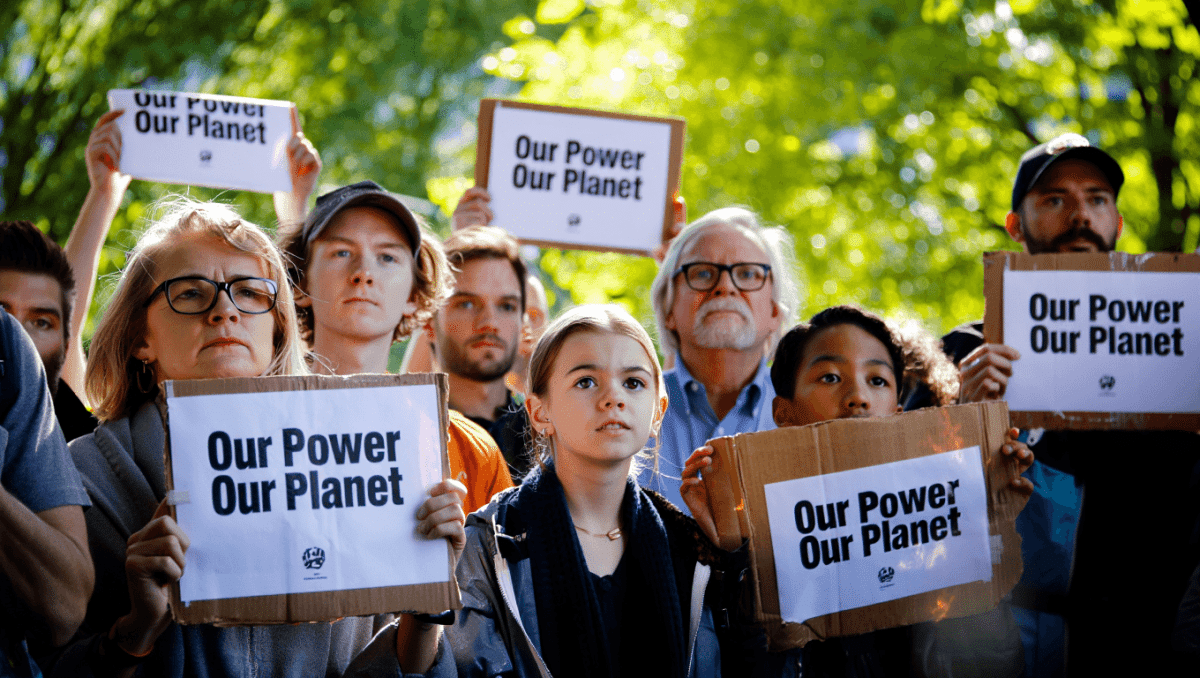
Earth Day returns with a powerful message in just 23 days. The theme, ‘Our Power, Our Planet’, emphasizes that environmental progress doesn’t depend on any single election or administration. Instead, everyday action from communities worldwide creates lasting change that protects our air, water, and health.
🔥 Quick Facts
- Date: Wednesday, April 22, 2026, with major activities starting Saturday, April 18
- Global Theme: ‘Our Power, Our Planet’ focuses on collective community action and environmental resilience
- Scale: EARTHDAY.ORG mobilizes 1 billion people across 193 countries annually
- First Earth Day: April 22, 1970, drew 20 million Americans to streets, sparking the modern environmental movement
Why ‘Our Power, Our Planet’ Matters Right Now
Environmental progress remains resilient despite political uncertainty. The ‘Our Power, Our Planet’ theme challenges the false belief that lasting environmental protection requires perfect conditions or single powerful leaders. Instead, communities, educators, workers, and families prove daily that grassroots action drives real change. Clean energy has already created millions of jobs, lowered costs, and delivered healthier air and water worldwide.
This year’s Earth Day affirms a fundamental truth: environmental safeguards aren’t determined by policy seasons. They’re sustained by persistent public pressure and local innovation that makes economic and public health sense regardless of which administration holds office.
Earth Day History: From 1970 to 2026
Earth Day was born on April 22, 1970, when U.S. Senator Gaylord Nelson and young activist Denis Hayes deliberately chose this date to fall between Spring Break and Final Exams, maximizing student participation. That single day became a national milestone. The first Earth Day mobilized 20 million Americans into the streets, igniting the modern environmental movement.
Today, Denis Hayes serves as Board Chair Emeritus of EARTHDAY.ORG, the non-profit organization that grew from that historic 1970 event. The movement now reaches 1 billion people in 193 countries every April 22, making Earth Day one of the world’s largest secular observances and a powerful platform for global environmental action and civic engagement.
How to Participate: Events, Activities, and Actions
Earth Day 2026 offers countless ways to make an impact, whether you’re organizing major demonstrations or neighborhood cleanups. EARTHDAY.ORG encourages seven core action types: peaceful demonstrations and marches, voter registration drives, town halls, grassroots organizing, teach-ins, community cleanups, and ecosystem restoration campaigns.
| Action Type | Description |
| Community Cleanups | Streets, parks, rivers, lakes, beaches, and plastic pollution removal |
| Tree Planting | Reforestation and ecosystem restoration projects |
| Advocacy Events | Voter registration, town halls with officials, peaceful marches |
| Educational Events | Teach-ins in schools, universities, churches, and communities |
Every individual has power to create change. Whether you’re joining a local cleanup or contacting elected officials, imperfect, collective action creates real environmental progress. According to EARTHDAY.ORG, when individuals act, communities form. When communities speak up, leaders listen.
“All those years ago, in 1970, we were ridiculously confident that we were going to win. We launched a genuine environmental revolution. We proved that an engaged public can be an unstoppable force. It can be again in 2026.”
— Denis Hayes, Organizer of the First Earth Day and Board Chair Emeritus, EARTHDAY.ORG
Free Resources and Tools Available to Everyone
EARTHDAY.ORG provides free toolkits to help organize successful Earth Day events. The Earth Hub offers step-by-step guides, promotional templates, safety guidelines, and talking points for seven core activities: Community Cleanup Kit, Peaceful Demonstration Guide, Tree Planting Organizer, Town Hall Planning Guide, Voter Registration Drive Kit, Teach-In Curriculum, and Faith Gathering Resources.
Finding events near you is simple using the interactive Earth Day event map. Enter your address, city, or ZIP code to discover climate marches, rallies, teach-ins, sustainability workshops, and Earth Day fairs happening throughout April. You can also register your own event to amplify collective impact. The platform mobilizes grassroots organizing while ensuring accessibility for working people, students, and families through weekend activities starting April 18.
What Will You Do on Earth Day 2026?
Earth Day 2026 arrives at a critical moment when environmental protections require visible, organized public support. The theme ‘Our Power, Our Planet’ represents a choice facing everyone: silence accepts the status quo, but real change requires persistent public pressure that cannot be ignored. Will you plant a tree, join a cleanup, register voters, teach others, or march for policy change? The 56-year legacy of Earth Day proves that ordinary people doing extraordinary things together reshape history. Your action, no matter how imperfect, strengthens the global movement protecting our shared future.
Sources
- EARTHDAY.ORG – Official Earth Day 2026 theme announcement, event resources, and global mobilization framework
- PRNewswire – Press release documenting the official announcement of ‘Our Power, Our Planet’ theme on January 14, 2026
- Earth Day Network – Historical documentation of the 1970 Earth Day, Denis Hayes’ leadership, and current initiatives reaching 1 billion people