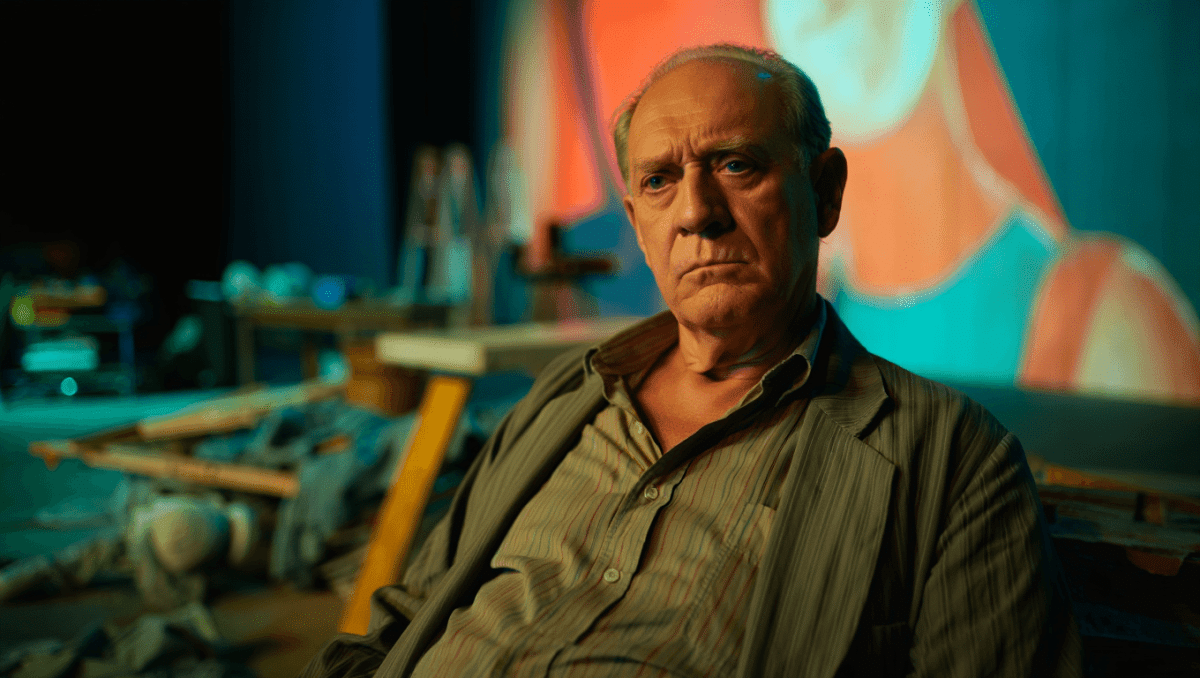
John Lithgow just delivered a towering performance in Broadway’s hotly anticipated play Giant, which opened on March 23, 2026 at the Music Box Theatre. Critics are calling his portrayal of author Roald Dahl nothing short of extraordinary, with performances that shift from vulnerable to venomous. What makes this production so urgent right now?
🔥 Quick Facts
- Opening Date: March 23, 2026 at Broadway’s Music Box Theatre after London’s West End run
- Awards: Olivier Award winner for Best New Play, with Lithgow winning Best Actor
- Runtime: 2 hours 20 minutes including intermission, directed by Nicholas Hytner
- Critical Reception: Rave reviews across major outlets including Variety, NYT, and Deadline
A Masterclass in Monstrosity and Moral Complexity
Lithgow’s explosive turn captures Dahl at a pivotal 1983 moment when the beloved children’s author faced international backlash. The play focuses on a scandal surrounding an antisemitic broadside he published, disguised as a book review. Deadline praised Lithgow for delivering a tour de force performance that explores every shade of the character, from wounded vulnerability to hateful cruelty.
The production, written by Mark Rosenblatt, doesn’t shy away from Dahl’s documented bigotry. Lithgow‘s Dahl dismisses critics as Satan’s Spinster Army, makes offensive references to Holocaust survivors, and plays mind games with a young publishing executive from New York. Yet somehow, the actor ensures we see the psychological roots of his character’s rage, the broken boy inside the giant.
Why This Production Feels Alarmingly Timely
John Lithgow himself called the play alarmingly timely as it opened on March 25, 2026. The central conflict mirrors contemporary debates about cancel culture, political correctness, and freedom of speech. The story examines how institutions respond to bigotry, how victims of such bigotry respond, and whether redemption is possible.
Giant presents these arguments with expert modulation, avoiding simplistic sides. Characters like Lithgow‘s publisher and fiancée show how complicity operates in systems of power. The two-hour-twenty-minute runtime allows the play to breathe, revealing that moral complexity cannot be resolved in a heated argument.
The Cast and Production Design Create New Context
| Role | Actor | Character Focus |
| Roald Dahl | John Lithgow | Antagonist protagonist, complex bigotry |
| Jessie Stone | Aya Cash | Young Jewish executive, moral center |
| Felicity Crosland | Rachael Stirling | Fiancée, enabler or protector |
| Tom Maschler | Elliot Levey | Publisher caught between profit and principle |
Bob Crowley’s set design depicts Dahl’s home under renovation, with scattered ladders, wall patches, and stacked boxes reflecting personal chaos. Lithgow physically contorts his tall frame to register the infirmities that twisted aging Dahl. The Olivier Award-winning production transfers every detail from London’s Royal Court Theatre.
Critical Consensus Points to Awards Season Glory
Lithgow earned comparisons to legendary performances for his nuanced portrayal. The New York Times called his work a fascinating study in monstrosity, while The Telegraph named it career-best. Industry observers suggest Lithgow and Daniel Radcliffe from Every Brilliant Thing are shaping up as 2026 Tony Award frontrunners for Best Actor in a Play.
Variety, Playbill, and New York Theatre Guide published glowing reviews. Aya Cash earned praise for delivering Stone’s lines with absolute conviction, creating a moral spine strong enough to meet Lithgow‘s intensity. Rachael Stirling and Elliot Levey completed an ensemble that holds its own against a towering lead performance.
How Does Giant Challenge What Broadway Can Explore Today?
Giant succeeds because it refuses easy answers about whether Dahl‘s prejudices stemmed from trauma, fear, or calculated cruelty. Lithgow shows moments of genuine affection for his longtime gardener and confesses shared loss to his antagonist, complicating our moral judgment. The play argues that cancel culture and political correctness, while sometimes necessary, cannot resolve the deeper human wounds that drive bigotry.
Mark Rosenblatt’s script, directed by Nicholas Hytner, suggests that understanding requires conversation, not condemnation alone. Yet the play never excuses or minimizes Dahl’s documented bigotry. John Lithgow‘s performance proves that complex villainy can be dramatically riveting and morally unambiguous at the same time. Running through June 28, 2026, Giant represents exactly the kind of challenging, timely drama Broadway needs.
Sources
- Deadline Hollywood – Comprehensive review with production details and plot summary
- Playbill – Awards history and critical roundup coverage
- Variety – Performance praise and production analysis