Show summary Hide summary
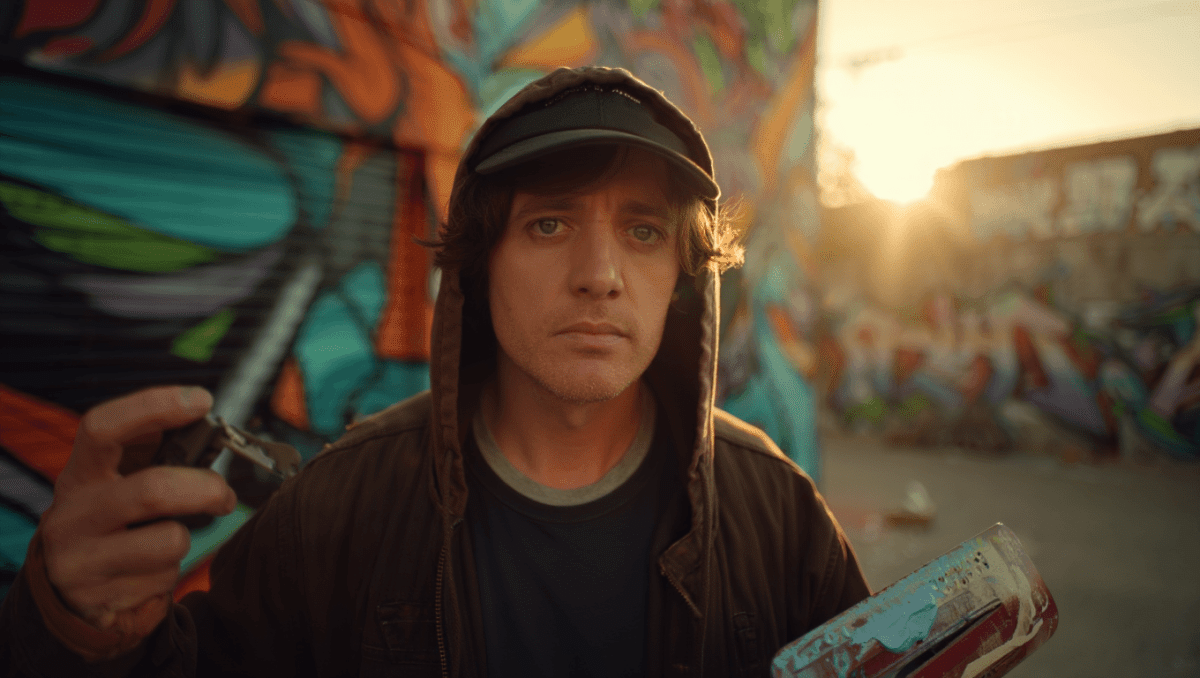
Banksy, the world’s most famous street artist, has been conclusively identified as Robin Gunningham, a 52-year-old Bristol native, according to an explosive Reuters investigation published March 13, 2026. The probe discovered previously unreported police documents and court records proving the identity that eluded the art world for decades. The artist has since legally changed his name to David Jones, which he used to travel to Ukraine last year.
🔥 Quick Facts
- Real Name: Robin Gunningham, born in Bristol, England in 1973
- Key Discovery: NYPD arrest records from September 18, 2000, containing handwritten confession signed by Gunningham
- Name Change: Legally changed to David Jones in 2008 after first exposure by the Mail on Sunday
- Ukraine Connection: Traveled as David Jones alongside Massive Attack’s Robert Del Naja to paint a series of murals there
How Reuters Cracked the Case
The investigation began with Ukrainian villagers who witnessed Banksy painting murals in Horenka in late 2022. Reuters showed residents a photo lineup and tracked immigration records that revealed who had entered the country. Journalist Simon Gardner and his team located previously unreported court files from New York dating to September 2000, when Banksy was arrested for defacing a Marc Jacobs billboard atop a Manhattan building. Inside the case file sat a handwritten confession signed by Robin Gunningham. The man who became an icon had left his real name in police custody three decades earlier.
The breakthrough connected decades of scattered evidence. Banksy’s former manager Steve Lazarides confirmed that in 2008, he arranged a legal name change for the artist. He described the new identity as “just another name,” something generic enough to vanish in plain sight. The new name was David Jones, one of the most common British male names. On October 28, 2022, records show that a David Jones, with a birth date matching Robin Gunningham’s, crossed into Ukraine from Poland at the same location and time as Robert Del Naja.
Golden Globes guide: 2026 essentials, dates and how to watch
Jay-Z set to celebrate Reasonable Doubt’s 30th anniversary with Barclays Center residency rumors
The Bristol Connection
Robin Gunningham grew up in Bristol, a city famous for its graffiti and music scenes. School records from Bristol Cathedral School show he was an accomplished artist and athlete, even appearing in school productions and playing goalkeeper on the field hockey team. Lazarides, Banksy’s former manager, credited 3D, a street artist known as Robert Del Naja from the band Massive Attack, as a major influence on Banksy. Both men shared a fascination with stencil art, punk aesthetics, and Bristol’s counterculture. They later became collaborators. In 2022, Del Naja traveled to Ukraine with the artist, serving as his partner on the series of murals that sparked Reuters’ investigation.
The connection runs deeper than just artistry. Both Gunningham and Del Naja cite the anarchist punk band Crass as inspiration. Banksy even included a Crass poster in his 2023 “Cut & Run” exhibition, displayed prominently in a diorama of his boyhood bedroom. Del Naja discussed Crass records in interviews dating back to 2014. The shared influences, geographic proximity, and working relationship paint a picture of two Bristol artists whose careers became intertwined.
| Timeline | Key Events |
| 1973 | Robin Gunningham born in Bristol |
| September 2000 | Arrested in NYC for billboard vandalism; signed confession |
| 2008 | Mail on Sunday identifies him as Banksy; legally changes name to David Jones |
| October 2022 | Travels to Ukraine as David Jones with Robert Del Naja |
| March 2026 | Reuters publishes comprehensive investigation confirming identity |
“I don’t know why people are so keen to put the details of their private life in public. They forget that invisibility is a superpower.”
— Banksy, Time Out New York, 2010
The Artist’s Response and Legal Strategy
Banksy’s longtime lawyer Mark Stephens responded to Reuters with a statement saying the artist “does not accept that many of the details contained within your enquiry are correct.” However, he did not directly deny the identity claim. Stephens urged Reuters not to publish, arguing that unmasking would violate the artist’s privacy and harm his work. He warned that anonymity “protects freedom of expression by allowing creators to speak truth to power without fear of retaliation.” Yet Reuters proceeded, concluding that Banksy’s anonymity, though presented as protective, has actually enabled him to operate without the transparency applied to other influential cultural figures. The artist has not issued a public statement and his company Pest Control Office said he “has decided to say nothing.”
The legal name change to David Jones proved crucial to Banksy’s continued operations. It essentially erased any connection between Robin Gunningham and tax records, property filings, or employment documentation. Lazarides confirmed arranging this change in 2008, the same year Mail on Sunday first identified him. The name is so common in Britain that it functions as “human camouflage.” Banksy’s lawyer ultimately framed his client’s privacy as a matter of public concern, but neither confirmed nor denied the identity question directly.
What This Means for Art and Commerce
The revelation raises questions about how Banksy operates in plain sight. His 2025 mural on London’s historic Royal Courts of Justice depicts a judge beating a protester. Police investigated, but the government has spent over £23,690 removing it and no charges have been filed. Street artists question whether Banksy receives special treatment from British authorities, a privilege not extended to other vandals. Yet art dealer Robert Casterline argues that Banksy’s street works function as invisible marketing, boosting collector confidence and auction prices. One painting sold for £4.2 million last year. Even vandalism, when attributed to Banksy, becomes valuable. The mystery was part of the brand value. Will knowing his name change that equation?
What Happens Next to the World’s Most Famous Anonymous Artist?
For decades, Banksy’s anonymity seemed central to his appeal and his art’s power. The revelation of his identity ends an era in art history. Robin Gunningham, now publicly named, will face new scrutiny. His work may gain new context, or it may lose some mystique. Some collectors worry about market value, though dealers insist the art speaks for itself. Banksy’s silence on the matter is telling. The artist who built his reputation on subversion now faces the ultimate subjection: exposure. Whether he continues creating, how he responds artistically, and whether his anonymity-dependent brand survives intact remain the questions everyone is asking about this Bristol-born street artist who nearly made the world forget his real name.
Sources
- Reuters – Comprehensive investigation by Simon Gardner, James Pearson, and Blake Morrison proving Banksy’s identity through court documents and immigration records
- The Guardian – Analysis of Reuters findings and their implications for Banksy’s art and legacy
- NYPD records – September 2000 arrest documents and handwritten confession bearing Robin Gunningham’s signature