Show summary Hide summary
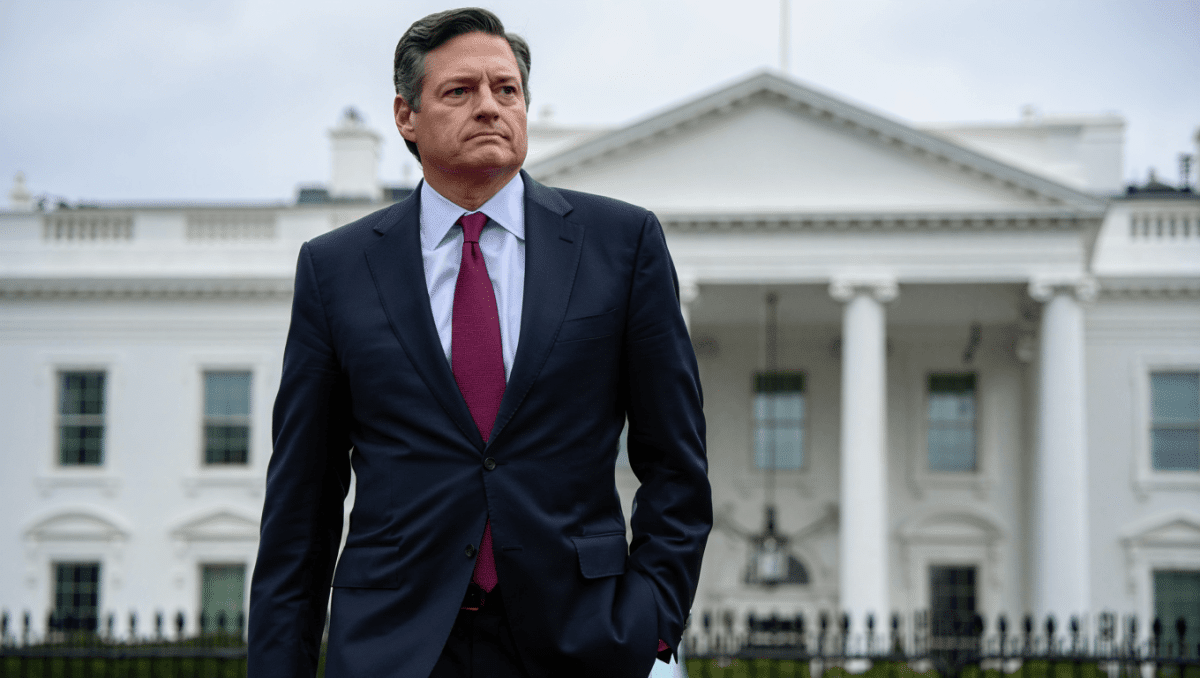
Ted Sarandos blasted Paramount’s bid for Warner Bros as “irrational” on March 1, 2026. The Netflix CEO claimed Trump pressure drove David Ellison’s company to irrational heights. What did Sarandos reveal about this Hollywood power play?
🔥 Quick Facts
- Irrational Offer: Sarandos called Paramount’s $110.9 billion bid “unusual and irrational” in a Bloomberg interview.
- Trump Factor: According to the CEO, “It’s cheaper to make noise than to raise your bid.” Political pressure influenced the bidding war.
- White House Meeting: Sarandos visited the White House on February 26, 2026, hours before Netflix pulled its $82.7 billion offer.
- Deal Terms: Netflix had a strict price range and walked away when Paramount’s revised offer proved too expensive at $31 per share.
Why Sarandos Called Paramount’s Strategy ‘Irrational’
In his first public comments since Netflix withdrew from the Warner Bros bidding war, Ted Sarandos didn’t hold back criticism. “Unusual, yeah, unusual, irrational, whatever words you want to use,” he said to Bloomberg on March 1, 2026. The Netflix co-CEO suggested that Paramount’s increasingly aggressive offers defied financial logic and market fundamentals. David Ellison’s company ultimately prevailed with a $110.9 billion deal, valuing shares at $31 each, a price Netflix deemed unsustainable.
Sarandos emphasized that Netflix maintained strict financial discipline. “We had a very tight range that we’d be willing to pay,” he explained. The streaming giant refused to be drawn into a bidding spiral driven by factors beyond financial prudence.
YouTube TV drops cheaper plans at $54.99, here’s what changed
Ted Sarandos blasts Paramount’s Warner Bros. bid as ‘irrational,’ Trump pressure exposed
The Trump Pressure Playbook Exposed
Sarandos directly addressed President Trump’s influence on the deal dynamics. “It’s a lot cheaper to make noise than it is to actually raise your bid,” he stated bluntly. The Netflix CEO revealed that Trump’s initial interest centered entirely on CNN, which would have been spun off under Netflix’s proposal. “Once it was clear that we weren’t in the CNN business, it was a lot less interesting. He didn’t care that much more about our deal,” Sarandos said.
Paramount kept the entire Warner Bros empire intact, including cable networks that Trump viewed less favorably. This strategic difference proved crucial in the political calculus surrounding the acquisition.
Timeline, Money, and Market Drama
| Event | Details |
| Netflix Bid | $82.7 billion for Warner Bros. assets |
| White House Visit | February 26, 2026, hours before withdrawal |
| Paramount’s Revised Bid | $110.9 billion, $31 per share |
| Netflix Withdrawal | February 26, 2026, after Sarandos left White House |
Netflix announced its withdrawal minutes after Sarandos departed the White House on February 26. The timing sparked speculation about Trump pressure, but Sarandos clarified the decision was purely financial. “We knew right away when we got the notice on Thursday that they had a superior offer and the details of that deal,” he said. The streaming platform made a disciplined exit rather than chase an increasingly expensive and irrational acquisition.
What This Loss Means for Netflix’s Future Strategy
Sarandos adopted a surprisingly optimistic tone about Netflix‘s loss. “I’m confident in our future that we’re not impacted by all that. In fact, maybe it’s to our advantage,” he stated. The CEO highlighted unexpected benefits from the process, particularly strengthened relationships with theatrical operators. Netflix committed to 45-day exclusive theatrical windows if it had won, signaling a major shift in the company’s content strategy. Sarandos noted exciting collaborations already underway, including Stranger Things projects and theatrical releases like One Piece.
He concluded with a note of caution: “I hope I’m wrong for the sake of the industry.” Sarandos expressed concern about Paramount’s ability to service over $95 billion in debt while managing the combined company. The largest leveraged buyout in history could reshape Hollywood through forced cost-cutting.
Has the Streaming Wars Era Fundamentally Changed?
The Warner Bros bidding war revealed something fundamental about modern deal-making: political pressure, not just financial merit, drives outcomes. Paramount’s willingness to take on massive debt, reportedly influenced by Trump administration dynamics, defied traditional M&A logic. Sarandos‘s frank assessment suggests Netflix recognized this shift and chose not to compete on an irrational playing field. Will legacy media consolidation continue to be shaped more by political connections than streaming technology? The answer may determine whether Netflix‘s exit was wise discipline or a missed strategic opportunity.
“Unusual, yeah, unusual, irrational, whatever words you want to use in that. It’ll be fascinating to see the next steps. I’m confident in our future that we’re not impacted by all that. In fact, maybe it’s to our advantage.”
— Ted Sarandos, Netflix Co-CEO
Sources
- Bloomberg – Ted Sarandos full interview on Netflix’s Warner Bros. bid withdrawal and Trump influence.
- The Hollywood Reporter – Ted Sarandos discusses the White House visit and reasons for pulling the deal.
- CNBC – Coverage of Sarandos’s White House meeting on February 26, 2026, and deal termination.