Show summary Hide summary
Country Joe McDonald, the legendary Woodstock frontman and co-founder of Country Joe and the Fish, has died at age 84. The iconic singer passed away on March 7, 2026, in Berkeley, California, from complications due to Parkinson’s disease. His death marks the end of an era for the psychedelic rock movement and anti-war activism.
🔥 Quick Facts
- Full Name: Joseph Allen “Country Joe” McDonald (January 1, 1942 – March 7, 2026)
- Iconic Song: “I-Feel-Like-I’m-Fixin’-to-Die Rag,” a satirical anti-Vietnam War anthem performed at Woodstock
- Career Span: 60 years producing 33 albums and hundreds of songs
- Legacy: Co-founded Country Joe and the Fish in 1965, shaped 1960s counterculture music
A Defining Voice of the Anti-War Movement
Country Joe McDonald emerged as one of the most powerful voices of Vietnam War resistance in the 1960s. His satirical composition “I-Feel-Like-I’m-Fixin’-to-Die Rag” became an instant anthem for protesters nationwide. The song’s clever, provocative lyrics transformed political rage into memorable music that resonated across generations. McDonald recorded alongside rising counterculture icons, establishing himself as both artist and activist.
Few musicians captured the era’s political fury with such humor and intensity. His ability to blend serious social commentary with infectious melodies made complex anti-war messages accessible to mass audiences. The song appeared prominently in the 1969 Woodstock documentary, cementing its place in cultural history.
Jack Osbourne’s kids now include newborn named Ozzy, honoring late dad
Jake Paul receives Trump’s complete endorsement for potential office run
Co-Founder of a Psychedelic Revolution
In Fall 1965, Country Joe McDonald co-founded Country Joe and the Fish alongside guitarist Barry “The Fish” Melton in Berkeley, California. The band quickly became one of the defining acts of the San Francisco psychedelic scene. Their 1967 debut album, “Electric Music for the Mind and Body,” stands as a landmark of psychedelic rock innovation.
The band’s sound combined electric experimentation with folk sensibilities, creating a distinctive style. They released multiple recordings during the late 1960s and toured extensively, becoming closely identified with West Coast counterculture. McDonald’s vocals and songwriting defined the group’s identity for generations of fans.
Impact Timeline
| Year | Achievement |
| 1965 | Co-founded Country Joe and the Fish in Berkeley |
| 1967 | Released landmark debut album “Electric Music for the Mind and Body” |
| 1969 | Performed at Woodstock Festival, featuring “I-Feel-Like-I’m-Fixin’-to-Die Rag” |
| 1960-2026 | Recorded 33 albums and wrote hundreds of songs across 60 years |
“His wife, Kathy McDonald, shared that Country Joe’s legacy extends far beyond music into activism and compassionate engagement with Vietnam War veterans throughout his decades-long career.”
according to published sources and family statements
Woodstock’s Defining Performance
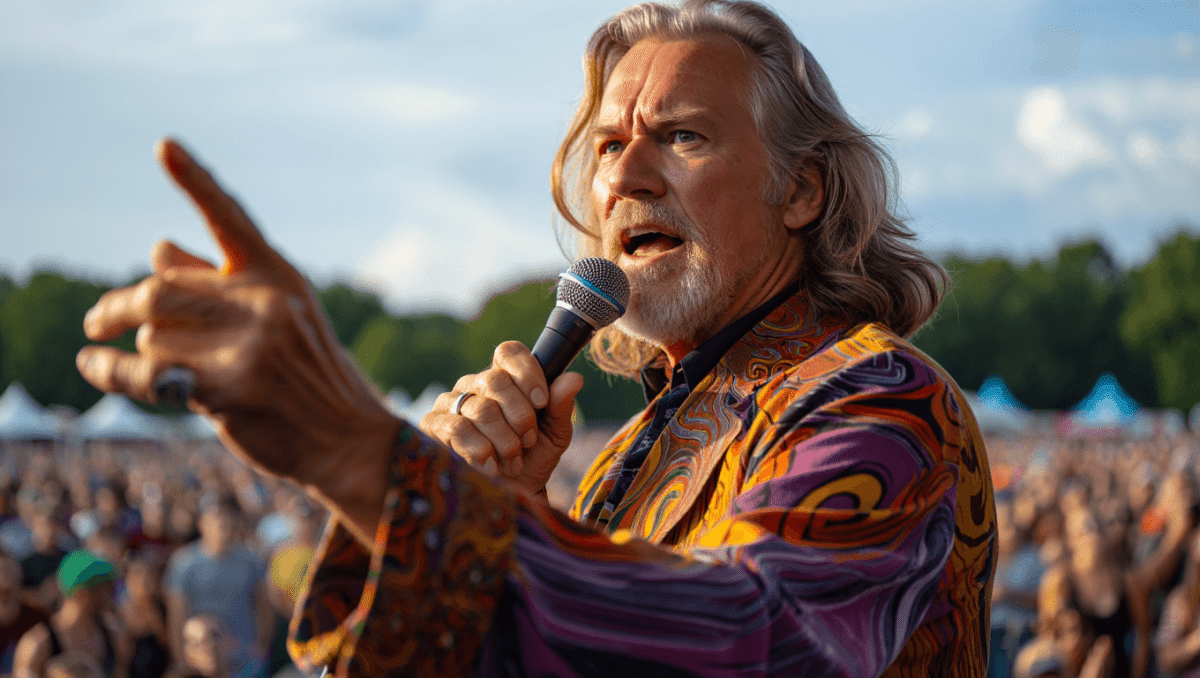
Country Joe McDonald’s solo performance at Woodstock 1969 remains one of the festival’s most iconic moments. He delivered the anti-Vietnam War anthem to hundreds of thousands of young people, creating a defining counterculture touchstone. His appearance in the Woodstock documentary cemented his place in rock history. The performance captured the spirit of an entire generation demanding peace.
McDonald’s ability to command a stage and connect emotionally with audiences set him apart from contemporaries. His passionate delivery and sincere conviction transformed protest into art. That Woodstock moment influenced musicians for decades, proving that popular music could drive social change.
Will His Powerful Musical Legacy Continue to Inspire Future Generations of Activists?
Country Joe McDonald leaves behind a profound artistic heritage that transcends simple nostalgia. His recordings, live performances, and songwriting principles continue to guide young musicians exploring political themes. Universities analyze his work in courses on American music history and social movements. Streaming platforms expose fresh audiences to his catalog constantly.
The broader question surrounding McDonald’s legacy concerns its potential evolution. How will contemporary artists honor his commitment to using music for social justice? His example demonstrates that rock musicians possess unique power to amplify marginalized voices. Future generations looking to understand 1960s activism will inevitably encounter his music and discover its enduring relevance to modern struggles.
Sources
- Deadline – Breaking entertainment news reporting McDonald’s death and career achievements
- USA Today – Woodstock legend profile and historical context
- NPR – Anti-war movement analysis and McDonald’s cultural impact