Show summary Hide summary
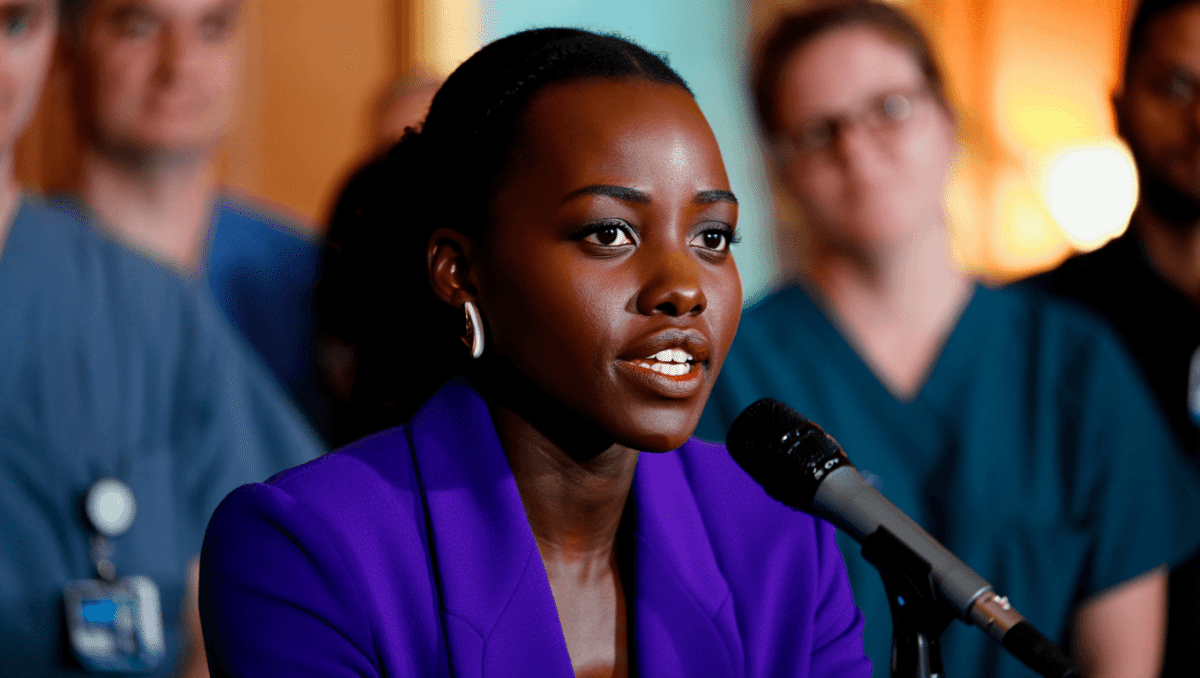
Lupita Nyong’o just launched a groundbreaking fibroids awareness campaign called ‘Make Fibroids Count’, finally breaking silence on a 12-year health journey few knew about. The Oscar-winning actress revealed she was diagnosed with 30 uterine fibroids in 2014, the same year she won her Academy Award. Now she’s partnering with the Foundation for Women’s Health to transform how millions of women get treated.
🔥 Quick Facts
- Diagnosis Year: Nyong’o discovered fibroids in 2014 after winning her Oscar, underwent surgery to remove 30 growths
- Research Grant: $200,000 FWH x Lupita Nyong’o Uterine Fibroid Grant to fund minimally-invasive treatment innovations
- Massive Health Crisis: 15+ million US women affected, costing healthcare system $6 billion annually, yet drastically under-researched
- Campaign Mission: ‘Make Fibroids Count’ initiative to reject normalization of female pain and drive legislative action for better treatments
How a Hollywood Icon Broke Her 12-Year Silence
Lupita Nyong’o chose to stay silent about her fibroid diagnosis for over 12 years, enduring the pain alone while her career soared. She won the Academy Award for Best Supporting Actress in 2014 for ’12 Years a Slave’, but that same pivotal year, doctors diagnosed her with devastating uterine fibroids. The discovery felt like a private crisis overshadowed by public triumph. ‘I asked my doctor if I could do anything to prevent recurrence,’ she later revealed. ‘She said you can’t.’ That moment of helplessness, combined with the medical establishment’s lack of solutions, motivated her public advocacy journey.
After surgery to remove all 30 fibroids, she endured years of awareness about her condition while seeing others suffer silently. No celebrity, no platform, no conversation existed for women dealing with this widespread condition. The contrast between her global fame and the invisibility of female health issues fueled her decision to finally speak out in July 2025, followed by her powerful ‘Make Fibroids Count’ campaign announcement today, February 25, 2026.
Lupita Nyong’o launches fibroids awareness campaign, opens up about 12-year health journey
Is Norah O’Donnell back on CBS Mornings? Yes, she’s guest hosting this week
The $200,000 Research Grant That’s Changing Everything
In partnership with the Foundation for Women’s Health, Lupita Nyong’o launched a groundbreaking $200,000 research grant aimed at one goal: develop minimally-invasive or non-invasive treatments instead of surgical interventions. The FWH x Lupita Nyong’o Uterine Fibroid Grant officially opened applications to researchers, medical institutions, and health innovators worldwide. This isn’t performative activism. The funding directly accelerates innovation that could spare millions from what Nyong’o endured.
Medical researchers remain baffled why fibroids research stays so underfunded, despite affecting 80% of Black women and 70% of white women by age 50. The Foundation for Women’s Health reports the condition costs the American healthcare system over $6 billion annually, yet fibroids rank among the most overlooked research priorities. Women wait an average of 3.6 years before seeking treatment, enduring heavy bleeding, chronic pelvic pain, anemia, and infertility without adequate options.
| Category | Statistics |
| Women Affected in US | 15+ million |
| Healthcare System Cost | $6 billion annually |
| Black Women by Age 50 | 80% develop fibroids |
| White Women by Age 50 | 70% develop fibroids |
Nyong’o’s Powerful Congressional Advocacy Push
Lupita Nyong’o didn’t stop at the research grant. In July 2025, she partnered with U.S. lawmakers, including Congresswoman Shontel Brown, to introduce federal legislation demanding expanded fibroid research funding and better treatment access. The U-FIGHT Act specifically targets fibroids as a health priority, backed by personal testimony from America’s most recognizable Oscar winner. Her Capitol Hill appearance transformed the conversation from invisible women’s health into legislative action.
Black women face compounded disparities: fibroids appear earlier, grow larger, cause more severe symptoms, and result in significantly higher hospitalization and surgical intervention rates. Nyong’o’s advocacy centers on this inequity.
“Uterine fibroids have shaped the health experiences of far too many women—silently, painfully, and invisibly. This partnership is about shining a light on a condition that has gone unspoken for too long. It’s about funding solutions, driving innovation, and restoring quality of life to millions of women whose pain has been ignored or minimized.”
— Lupita Nyong’o, Academy Award-winning Actress and Fibroids Advocate
What Happens When Women’s Pain Gets Finally Recognized
The ‘Make Fibroids Count’ campaign represents the moment when celebrity platform meets medical urgency. Nyong’o’s decision to go public wasn’t just personal healing. She weaponized her fame for systemic change. Women across social media shared their own stories. The silence broke. Influencers, athletes, activists all contributed to a conversation that medical institutions had ignored for decades. Venus Williams, the tennis legend, publicly joined the advocacy effort in response.
The psychological impact can’t be overstated. Thousands of women who suffered alone suddenly found representation, validation, and hope. Clinical research teams now had funding. Policymakers had data and celebrity testimony. Innovation labs received grant applications. One woman’s choice to stop hiding about her health triggered a ripple effect transforming American medicine.
What Does the Future Hold for Millions Suffering in Silence?
Will the FWH x Lupita Nyong’o Uterine Fibroid Grant finally produce breakthroughs in minimally-invasive treatments? Can federal legislation like the U-FIGHT Act secure sustained research funding? Does ‘Make Fibroids Count’ inspire other celebrities to weaponize their platforms for underfunded health conditions? The answers depend on momentum, sustained attention, and resources. Lupita Nyong’o transformed a 12-year personal medical crisis into a movement demanding that women’s bodies, women’s pain, and women’s health matter enough to cure, not just manage.