Show summary Hide summary
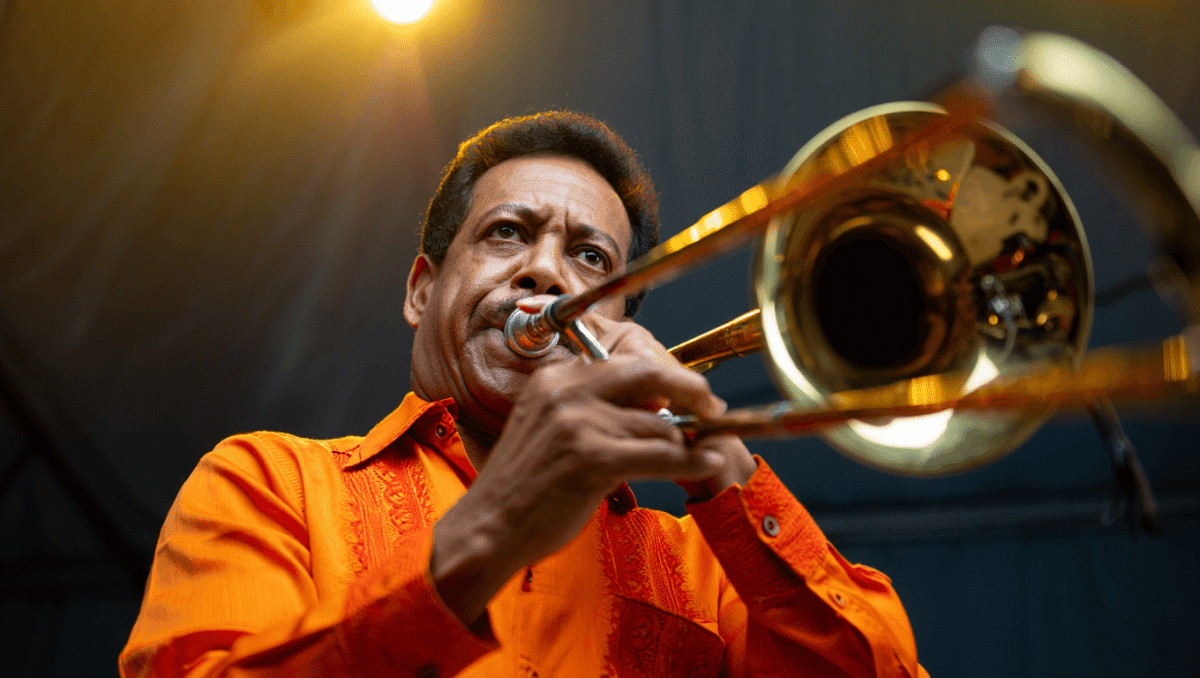
Willie Colón, the legendary Nuyorican trombonist and composer who revolutionized salsa music worldwide, died Saturday February 21, 2026, at age 75. His family announced the death on social media, saying he “departed peacefully this morning, surrounded by his loving family.” The news ended an era for a musician who shaped Latin music for nearly six decades.
🔥 Quick Facts
- Born: April 28, 1950, in the South Bronx, New York City
- Career Start: At 16, recorded debut album “El Malo” with Héctor Lavoe in 1967
- Legacy: Sold over 8 million records with 9 Gold and 5 Platinum albums globally
- Awards: Nominated 8 times for Grammy Awards in tropical music category
From South Bronx Streets to Salsa Royalty
Born William Anthony Colón Román, Willie grew up in the culturally rich streets of the South Bronx, where his grandmother Antonia taught him Spanish and Puerto Rican traditions. He began performing at age 11 with the bugle, moved to trumpet at 13, and discovered the trombone as his signature instrument. His grandmother’s influence shaped his cultural identity during a time when bilingualism wasn’t understood in New York. By the time he was 15, Fania Records recognized his prodigious talent and signed him to the label that would define his career.
At just 16 years old in 1967, Willie recorded “El Malo” (The Bad One), his iconic debut album with vocalist Héctor Lavoe. The album’s cover featured a striking double photograph of Colón, and the music inside proved Willie was indeed “el malo” in the best way. This partnership between Colón and Lavoe became one of salsa’s greatest duos, fundamentally transforming how the genre was performed and arranged.
Willie Colon dies at 75, salsa icon revolutionized Latin music
Willie Colon believes Steelers have shot at Super Bowl next year with Rodgers
Redefining Salsa Music and Instrumentation
Willie Colón almost single-handedly redefined salsa as a musical movement and cultural phenomenon. In 1969, his “Che Ché Colé” became a pivotal moment, merging Ghanaian rhythms with Puerto Rican bomba to create something entirely fresh. Songs like “Calle Luna, Calle Sol,” “La Murga,” and “Abuelita” revolutionized the genre’s emotional depth. Willie’s arrangements broke established norms, daring to experiment with instrumentation and structure that other musicians feared to touch.
His collaboration with Héctor Lavoe produced some of salsa’s most enduring classics, while later partnerships with Rubén Blades and Celia Cruz cemented his status as a genre architect. In 1976, he challenged conventions with his ballet “El Baquiné de los Angelitos Negros,” ushering in his symphonic salsa era and proving salsa could transcend dance floors to concert halls.
A Musician’s Impact Beyond Numbers
The statistics alone tell part of Willie’s story: over 40 albums, more than 8 million records sold worldwide, 9 Gold Records, 5 Platinum Records, and 8 Grammy nominations. Yet these numbers pale compared to his cultural significance. Willie Colón didn’t just make music, he created a soundtrack for the Nuyorican identity and global Latin culture. His last recorded performance in Puerto Rico came on August 9, 2025, with the Puerto Rico Philharmonic, proving his passion remained undiminished even at 75.
“Although we mourn his absence, we also rejoice in the eternal gift of his music and the cherished memories it created, which will live on forever.”
— Willie Colón’s Family, Statement on Facebook
Activism, Art, and the Man Beyond the Music
Willie Colón was equally celebrated for his sociopolitical activism as for his musical genius. He used his platform in New York’s Latino neighborhoods to advocate for social justice, making his endorsement coveted among politicians and community leaders. His voice on stages proved as powerful as his trombone’s voice in orchestras. Beyond music, Willie was a Renaissance man. He was self-taught in physics, business administration, computer programming, and enjoyed aviation, boxing, and horseback riding. He acted in films and television, appearing in productions like “Vigilante,” “Salsa,” and “Miami Vice.”
With his partner Julia Colón Craig, Willie fathered three of his four children, building a family that carried forward his legacy. His willingness to reinvent himself while honoring tradition made him timeless. Even as younger artists shaped contemporary Latin music, Willie’s work remained essential listening for anyone seeking to understand salsa’s soul.
Will Willie Colón’s Music Ever Fade from Our Hearts?
The answer is no. Willie Colón’s influence transcends generations, genres, and geography. From the South Bronx to concert halls worldwide, his trombone still speaks. Every time a salsa band pushes boundaries in arrangement, Colón’s pioneering spirit resonates. Every time a Nuyorican celebrates their culture through music, his legacy dances. The Fania Records catalog that Colón helped build remains foundational to Latin music, introducing millions to artists and sounds that defined decades. His technical mastery, emotional depth, and fearless innovation mean that eight million records sold is just the beginning. Future generations will discover Willie Colón and ask, “How did one musician reshape an entire genre?” The answer lies in his unwavering commitment to truth, beauty, and cultural pride.
Sources
- NBC New York – Willie Colón death announcement and extensive biography from Telemundo reporting
- Fania Records – Official artist essentials and discography records for Willie Colón
- Latin Times – Willie Colón salsa innovator tribute and career retrospective