Show summary Hide summary
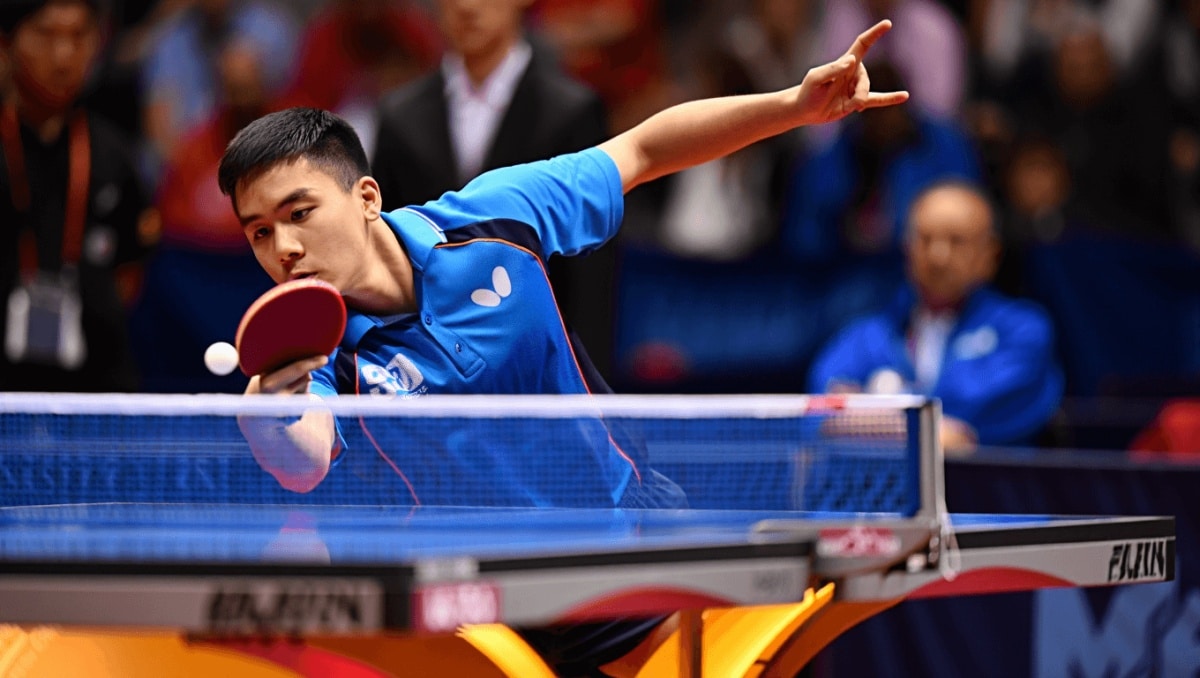
The “Marty Supreme” ping-pong championships have quickly become more than a niche tournament — they are reshaping how amateur table tennis is played and consumed. With a hybrid format that rewards endurance and improvisation as much as technical skill, the series poses a new question for players and spectators: what does it take to last through its rapid-fire, high-stakes matches?
What makes this tournament different
At first glance the event looks like any local competition: wooden tables, chalked brackets and cheering friends. But the organizers have introduced a survival-style structure that shortens matches, increases turnover and pushes players into continuous play. Matches often begin with timed rounds, sudden-death point systems and rule tweaks designed to favor adaptability over textbook technique.
Chamberlain Harris, 26-year-old Trump aide, appointed to arts commission with no experience
Jackson White calls Tell Me Lies ending ‘hilarious’ as season 3 finale wraps series
That experimental approach has already influenced online viewership. Clips of unexpected comebacks and frantic rallies circulate rapidly on social platforms, drawing casual viewers who might not normally follow table tennis. For clubs and tournament directors, the format offers a template for attracting younger, attention-driven audiences.
Why it matters now
Beyond spectacle, the format has practical consequences. Fast matches change training priorities, alter equipment needs, and reshape what tournament organizers must consider for safety and fairness. Local leagues watching the experiment could adopt elements of it, affecting how players train and how the sport is presented at community and regional levels.
For aspiring competitors, the immediate question is not just “Can I play?” but “Can I adapt?” That matters for anyone investing time or money into competing, coaching or streaming matches.
- Stamina — Short bursts of play with little recovery favor players who can sustain intensity across a long day.
- Adaptability — Rapid rule changes and surprise formats reward quick thinkers more than pure shot repertory.
- Spin control — The ability to generate and counter spin remains fundamental in tight, high-pressure points.
- Mental resilience — Sudden-death moments make psychological recovery as important as physical skill.
How players can prepare
Training for a conventional tournament emphasizes repeated technical drills and match simulation. Preparing for a “Marty Supreme”‑style event means shifting some focus.
Set pieces of practice should include short, intense intervals mirroring the tournament’s rounds, mixed with surprise-rule drills where players must alter serves or returns on the fly. Conditioning workouts that prioritize quick recovery—the same kind used by racket sports and combat athletes—are also useful.
Equipment choices matter, too. Slightly faster blades and grippier rubbers can give marginal gains in closing out quick points, but they won’t replace the need for situational awareness and positioning.
Rules, etiquette and safety
Organizers have published a few consistent ground rules, but many details vary by event. Players should expect:
- Time-limited rounds with cumulative scoring
- Occasional “wildcard” moments where rules change unexpectedly
- Strict warm-up windows and rapid turnaround of matches
Because matches are condensed, the risk of repetitive strain or collision increases if event logistics are lax. Tournament directors must prioritize adequate warm-up space, hydration access and medical readiness, or the format could invite avoidable injuries.
For spectators and local clubs
For fans, the rapid pace makes live viewing more accessible: you can watch several full matches in the time a traditional tournament would show one. That makes the format attractive to broadcasters and event promoters seeking higher viewer retention.
Clubs looking to adopt elements from the “Marty Supreme” approach should pilot small events first, gauge member feedback and document any unforeseen issues—especially scheduling and player safety. A successful experiment requires careful attention to fairness and clear communication of rule changes.
Whether the format becomes a lasting fixture or a short-lived trend will depend on how well organizers balance excitement with athlete welfare and competitive integrity.
Quick checklist before you compete
- Arrive hydrated and warmed up; expect compressed warm-up windows.
- Practice short-interval drills and surprise-rule scenarios.
- Inspect your gear for quick play—grip and rubber condition matter.
- Know the day’s specific rules; small variations can decide matches.
- Plan recovery between matches: nutrition, stretching and mental reset.
The “Marty Supreme” championships are an experiment in making table tennis faster, more unpredictable and more watchable for modern audiences. For competitors, that means adapting training and tactics; for organizers, it means balancing spectacle with safety. If the format continues to ripple through the sport, both amateurs and clubs will need to rethink what it means to be competitive in a world that favors speed and adaptability.