Show summary Hide summary
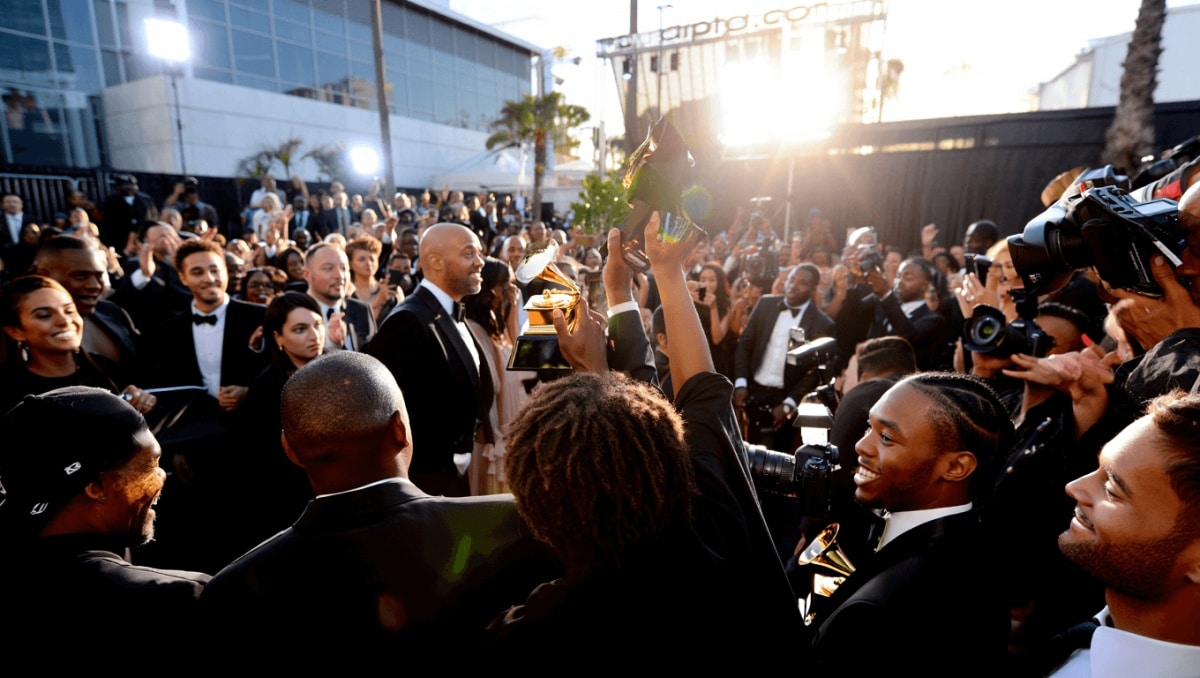
Sunshine and a buzz of industry traffic greeted attendees outside Crypto.com Arena on Sunday, Feb. 1, as the 2026 Grammys unfolded in Los Angeles. Backstage moments captured after each trophy reveal underlined two clear themes: music’s widening cultural reach and artists increasingly using their platform to talk about health, heritage and community — conversations that matter far beyond the stage.
The afternoon felt like organized motion: nominees, handlers, press and fans moving through security into the ceremony. Some winners returned to the press area to unpack what their awards signaled personally and for their genres.
Shaboozey on heritage and country’s roots
3:14 p.m. PT: After taking home the trophy for best country duo/group performance with “Amen,” Shaboozey grew emotional describing his background as the child of immigrants and how that lineage intersects with country music’s history. He emphasized the personal sacrifices behind his family’s journey to America and framed his success as an extension of those sacrifices — a fulfillment of long-held dreams from a small Virginia hometown.
Phish announces 21-date summer tour with 5 nights at Madison Square Garden
Kristen Bell joins Sonic 4 as Amy Rose, pink powerhouse with crush on Sonic
He also traced musical threads across continents, noting the banjo’s West African origins and how instruments and storytelling traveled with both voluntary and forced migrants. For him, country music represents resilience and the preservation of culture across generations.
Jelly Roll: three Grammys, recovery and priorities
7:05 p.m. PT: Jelly Roll left backstage still visibly elated after sweeping the three categories for which he was nominated, including best contemporary country album for Beautifully Broken. He reflected on the improbability of the moment, telling reporters that his younger self would never have imagined standing where he now stands.
He spoke candidly about a recent, dramatic weight loss — roughly 275 pounds — describing it as the result of sustained cardio, dietary changes and therapy. While he said he never used GLP-1 medication himself, he urged anyone struggling with extreme weight to pursue whatever helps them get healthy, free of judgment.
On personal struggles, Jelly Roll recommended connection over isolation. He urged people dealing with addiction or loneliness to find community spaces — whether recovery rooms, faith centers or local groups — and to step away from online toxicity. “Find a community,” he advised, pointing to the practical power of mutual support in recovery and rebuilding.
- Key takeaway: Winners used their platform to discuss health, recovery and faith as part of their creative stories.
- Industry impact: Continued mainstream acceptance of country works that center diverse voices and backgrounds.
- Cultural note: Artists emphasized community-based solutions over individual isolation.
Lola Young’s return and resilience
7:48 p.m. PT: British singer Lola Young, winner of best pop solo performance for “Messy,” described the song as a candid reflection of human vulnerability — “a recognition of not always feeling enough,” she said — and connected its resonance to shared insecurities. Young had paused her career late last year after collapsing at a festival; her comeback and this Grammy win felt to her like a careful, self-preserving return to the spotlight.
She framed the break as necessary space to heal mentally and physically, and thanked fans for their patience and support as she rebuilds her touring and recording life.
K-pop’s global reach: the team behind “Golden”
7:42 p.m. PT: The songwriting collective responsible for “Golden,” featured in the hit series K-Pop Demon Hunters, celebrated a win for best song written for visual media. Member EJAE highlighted what the victory means for representation: hearing Korean lyrics sung worldwide signals greater recognition of Korean culture and influence in global pop music.
This moment underlines how non-English-language work now competes on equal footing at major international awards, shifting expectations for how global audiences engage with music.
Jon Batiste on lineage and the tribute set
8:42 p.m. PT: Jon Batiste, a multiple Grammy winner with a long history of nominations and accolades, spoke about his award for best Americana album, Big Money, and his role in the star-studded tribute to Roberta Flack and D’Angelo. He described the tribute as a reunion of voices and histories — a collective act of honoring predecessors and acknowledging music’s continuity across generations.
For Batiste, those onstage represented more than individuals; they were part of an ongoing musical lineage that outlasts any single award or performance.
Artists, activism and the stage as platform
9:13 p.m. PT: SZA addressed why performers often speak to political and social crises during high-profile events. She contrasted the celebratory environment of awards with harsh realities playing out in communities, calling on artists to refuse despair and to foster local mutual aid and neighbor-to-neighbor care.
Her remarks urged collective action rather than surrendering to hopelessness, a sentiment that drew applause from the press room and echoed across conversations about the role artists play beyond entertainment.
Backstage conversations at the 2026 Grammys made one thing clear: the evening was not only about trophies. Winners used the moment to reflect on cultural roots, personal recovery and the broader obligations of public life — signaling shifts in the music industry where representation, mental health and community engagement are now central to how success is understood.
What to watch next:
- How labels and festivals respond to conversations about artist mental health and safety.
- Whether non-English-language songs continue to gain mainstream awards and radio play.
- How country and Americana scenes integrate and credit diverse musical lineages.