Show summary Hide summary
Former President Donald Trump publicly condemned the Grammy Awards after a joke about him during Sunday night’s broadcast, accusing the show and its host of spreading falsehoods and warning of legal action. The exchange highlights rising tensions between political figures and late-night satire as awards shows resume topical monologues.
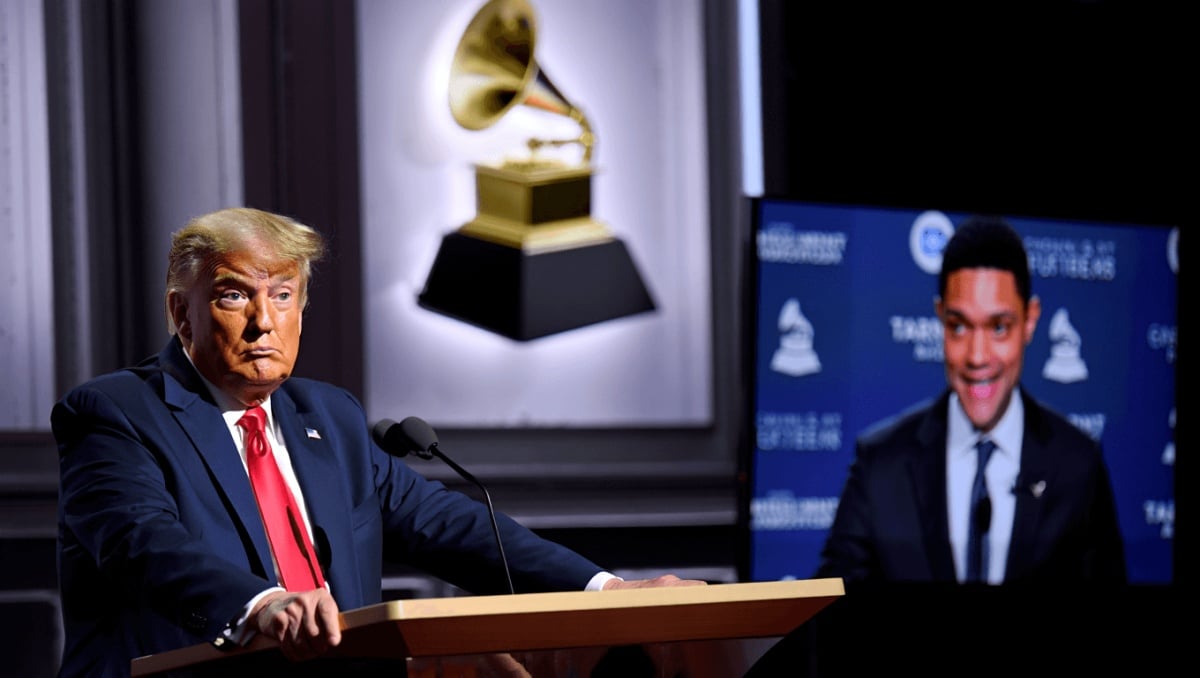
Trevor Noah, hosting the Grammys for the sixth straight year, made a quip during the Song of the Year announcement that linked prominent politicians to Jeffrey Epstein’s private island, drawing immediate attention and a sharp response from Trump on his platform.
What Trump said and what prompted it
In a lengthy post on Truth Social, Trump attacked both the ceremony and the network airing it, calling the telecast worthless and singling out Noah’s remark as defamatory. He denied ever visiting Epstein’s island and said the comment was false, signalling he intends to consult lawyers over the matter.
Tiki Ghosn rocks streamer DeenTheGreat during live party after disrespect
Tell Me Lies season 3 finale drops with explosive monologue, series ends
The host’s line — delivered after Billie Eilish was announced as Song of the Year — referenced high‑profile figures in a joke about Epstein’s island. Noah followed his established approach of mixing politics and pop culture in opening jokes, a pattern familiar to viewers but now at the center of a public dispute.
- Trump’s claim: He denied ever visiting Epstein’s island and called the broadcast false and defamatory.
- Noah’s role: The comedian made the remark during his opening monologue; the Grammys were broadcast on CBS.
- Response status: Neither the Recording Academy nor representatives for Noah had issued a statement when Trump’s post was published.
Why this matters now
When a former head of state publicly threatens litigation over a televised joke, it raises questions about the boundary between satire and defamation — and about how networks cover politically sensitive material. Awards-show monologues often aim for provocation; when those jabs involve contested allegations, they can provoke legal and reputational fallout.
For newsrooms and platforms, the incident underscores the need to balance immediate coverage of public reactions with caution about repeating unverified claims. For viewers, it signals that cultural events remain entangled with politics in ways that can prompt rapid, high-profile pushback.
Possible consequences and legal context
Legal experts often note that public figures face a higher bar when claiming defamation: they typically must prove statements were made with actual malice — knowledge of falsity or reckless disregard for the truth. That standard makes successful lawsuits harder for public officials than for private citizens, but threats of suits can still influence public debate and media behavior.
How this dispute evolves will depend on whether Trump’s team files a formal claim and whether the Recording Academy or Noah respond publicly. Even without litigation, high-profile complaints can lead networks to reassess editorial choices and prompt publishers to re-examine their fact-checking and legal review processes.
Quick timeline
| Event | When |
|---|---|
| Trevor Noah’s monologue with the disputed joke | Sunday night, during the Grammys broadcast |
| Trump’s response on Truth Social | Late Sunday, following the telecast |
| Official responses from Noah/Recording Academy | No public comment at time of publication |
As the story develops, observers will be watching for formal legal filings and any statements from CBS, the Recording Academy, or Noah’s representatives. The episode is another reminder that live televised events remain fertile ground for political confrontation — and swift public reaction.