Show summary Hide summary
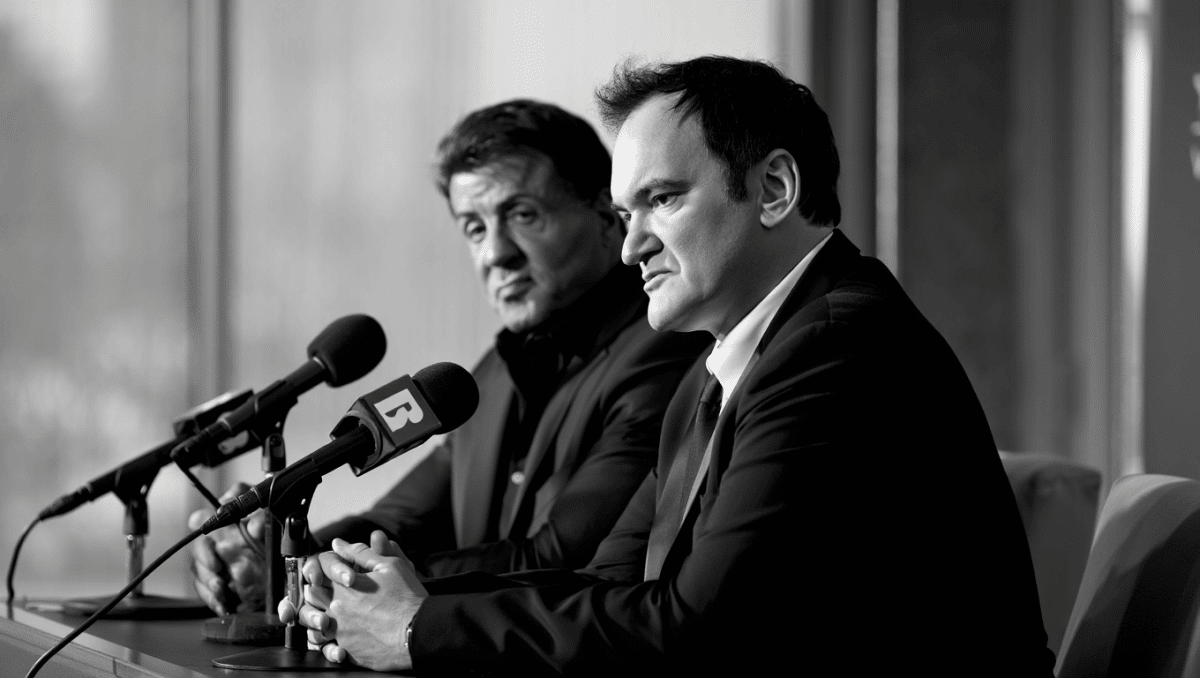
Quentin Tarantino just announced an unexpected creative partnership that’s sending shockwaves through Hollywood. The legendary director is teaming up with Sylvester Stallone to co-direct an ambitious 1930s gangster series that promises to be unlike anything either has created before.
🔥 Quick Facts
- Announcement Date: March 20, 2026 via TMZ and major entertainment outlets
- Project Format: Six-episode limited series shot entirely in black and white using authentic 1930s cameras
- Creative Team: Tarantino will write and co-direct, Stallone confirmed to co-direct from behind the camera
- Series Elements: Features gangsters, showgirls, boxing, music, shootouts, and nightlife in Depression-era setting
A Shocking Creative Alliance Nobody Saw Coming
Tarantino and Stallone represent two vastly different filmmaking sensibilities, which makes this collaboration all the more intriguing. Tarantino, known for his verbose dialogue and stylized violence, has never tackled a television project of this magnitude. Stallone, meanwhile, brings practical experience directing gritty, character-driven narratives from his 1978 directorial debut “Paradise Alley” and his proven track record in crime dramas like “Capone.” The pairing suggests both filmmakers are ready to push creative boundaries together.
Sources indicate this marks a significant shift for both artists. Stallone will remain behind the camera rather than act in the series, positioning himself purely as co-director. This decision underscores the gravity of the project and their commitment to storytelling excellence in the 1930s setting.
Quentin Tarantino teams up with Sylvester Stallone for new 1930s series
Austin Butler’s Caught Stealing finds redemption on HBO Max, becomes streaming hit
The Technical Ambition That Sets This Apart
What elevates this series beyond typical period dramas is its commitment to authenticity through black-and-white cinematography and authentic 1930s cameras. This technical choice demands precision, expertise, and a shared vision from both directors. Neither filmmaker has exclusively used period-appropriate technology for an entire series, making this an unprecedented creative experiment. Tarantino experimented with black-and-white sequences in previous films, while Stallone embraced gritty visual aesthetics in “Paradise Alley.” Together, they promise something visually distinctive in the modern television landscape.
The use of 1930s cameras eliminates digital manipulation and forces a return to classical cinematography principles. This choice reflects a purist approach that both directors respect and understand.
The Creative Vision and Story Elements
The six-episode limited series will be set during the 1930s, capturing the height of gangster culture, jazz age nightlife, and the raw energy of Depression-era America. Tarantino brings his signature style to writing, while the combination of gangsters, showgirls, boxing, and music promises a rich canvas for character development and dramatic tension. Shootouts, murder plots, and underworld intrigue are all on the table. The series represents a departure for Tarantino, who has traditionally worked in feature films, while simultaneously offering Stallone a chance to work with one of Hollywood’s most visionary filmmakers.
| Project Detail | Information |
| Format | Six-episode limited series |
| Time Period | 1930s (Depression era) |
| Visual Style | Black and white, 1930s cameras |
| Core Themes | Gangsters, boxing, showgirls, music, nightlife |
According to TMZ, the series will be “super authentic” and “shot in black and white, using 1930s cameras.” The pair envision a “full array of gangster elements: shootouts, boxing, music, and big bands.”
— Industry sources with direct knowledge
Why These Directors Are Perfect for a 1930s Crime Story
Both creators bring proven expertise in period pieces and crime narratives to this ambitious project. Tarantino received critical acclaim for “Inglourious Basterds,” his alternate-history WWII drama that masterfully captured 1939-era European settings and atmosphere. Stallone’s role as real-life mob enforcer Frank Nitti in “Capone” demonstrates his intimate understanding of gangster-era storytelling and the mentality of Depression-era criminals. “Paradise Alley,” his directorial showcase, reveals raw, character-driven sensibilities that align with sophisticated drama. The combination of Tarantino’s dialogue-heavy, stylized approach and Stallone’s visceral, grounded direction could create something entirely new in television.
What Can Fans Expect From This Game-Changing Partnership?
This collaboration challenges everything audiences think they know about either filmmaker working in television. Tarantino’s first major TV venture promises the kind of meticulous writing and eccentric character work that defined films like “Pulp Fiction” and “Kill Bill,” while Stallone’s directorial presence ensures grounded, physical storytelling that elevates every scene. The six episodes will likely explore interconnected crime narratives, complex character arcs, and philosophical questions about power, loyalty, and survival in 1930s America. Production timelines and casting remain undisclosed, but the announcement alone suggests industry insiders expect something revolutionary in prestige television drama.