Show summary Hide summary
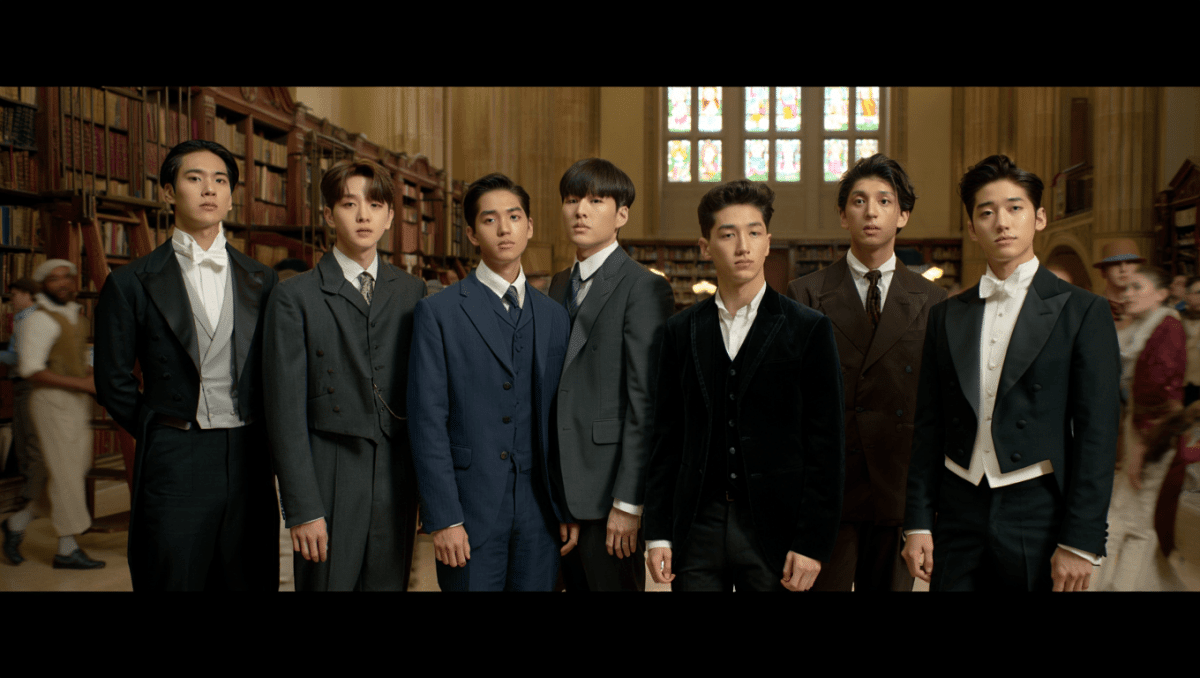
Howard University is sparking a heated debate after BTS featured the historic Black college in their controversial Arirang teaser. The animated trailer, released March 12, depicts the K-pop group honoring 1896 Korean recordings but ignites backlash over representation. Critics claim the visuals whitewash the campus by showing predominantly white figures while minimizing Black students.
🔥 Quick Facts
- Release Date: BTS Arirang album drops March 20, 2026, tomorrow across all platforms
- Controversy: Over 210 Reddit comments debate alleged whitewashing of a historically Black university setting
- Historical Connection: Seven Korean students recorded the first Arirang audio in 1896 at Howard with ethnologist Alice Fletcher
- Comeback Timeline: First BTS full album release in nearly four years after military service hiatus
The Seven Koreans Who Made History at Howard
On May 8, 1896, The Washington Post published an extraordinary article titled “Seven Koreans at Howard: Ran Away from Home to be Educated in United States.” The young men, scions of noble Korean families, had fled via Japan but ran out of funds in Vancouver. Minister Suh Kwang Bum, a Korean diplomat in Washington, personally funded their journey and coordinated their enrollment.
Howard University, founded in 1867 to educate formerly enslaved African Americans, became their unlikely destination. For international students of color facing racial barriers elsewhere, Howard represented opportunity. The Korean students impressed faculty with their talents, particularly their musical abilities. On their first night, they performed Korean melodies after initially resisting, charming the campus social gathering.
Howard University featured in BTS’ controversial Arirang teaser
Taylor Townsend faces Lulu Sun in Miami opener, eyes back-to-back titles
The Historic First Recording of Arirang
On July 24, 1896, just two months after arrival, American ethnologist Alice C. Fletcher invited three Korean students to her Washington home. Ahn Jeong-sik, Lee Hee-Cheol, and Son Rang recorded six wax cylinders over two days. They captured what became the first known audio recording of Korean voices in America, including a song Fletcher labeled “Love Song: Ar-ra-rang.”
The timing held profound meaning. Korea was collapsing under imperial pressure, sandwiched between Japanese and Russian powers. Japan had already assassinated Queen Min in 1895. King Gojong was governing from the Russian legation after fleeing. By preserving Arirang on wax cylinder during this crisis, the students achieved an act of cultural preservation that would survive 130 years of technological change.
Why the Trailer Sparked the Controversy
BTS released the animated teaser on March 12, drawing visual parallels between the seven 1896 students and the seven current members. The production team described it as “a modern reimagining” that “may deviate from actual historical events.” However, critics argue the visuals minimize Black representation at a school with a predominantly African American student body.
| Aspect | Criticism |
| Visual Representation | Only a few Black people shown in background, white figures more prominent |
| Historical Context | Howard is a historically Black university, not represented accurately |
| Counter-Argument | Creative reimagining, not a literal documentary of 1896 |
| Historical Fact | About one-third of Howard students in 1896 were white, adding nuance to debate |
Social media erupted with reactions. Reddit forums labeled the move “disrespectful” and “distasteful,” with over 210 comments debating the issue. Some defended it as artistic liberty for a Korean cultural moment. Howard University released a carefully worded statement praising the historical connection but did not directly address representation concerns.
“They became the first to record Korean voices and music in the United States—an early example of the University’s enduring role as a crossroads of global culture.”
— Howard University, Official Statement
What BTS Says About This Creative Choice
The album cover shows all seven BTS members in formal tailored suits evoking early 20th-century studio portraiture. The production team, directed by Hur Sungwhe with art direction by Léa Pinto, positioned the group as inheritors of a 130-year tradition of Korean cultural assertion. Both the 1896 students and 2026 BTS members represent Koreans preserving culture on international stages during vulnerable moments.
BTS has not issued additional comments responding to whitewashing accusations. The group’s record label, Big Hit Music, has remained silent on the controversy. Many ARMYs (BTS fans) argue the focus should remain on celebrating Korean-American historical intersection rather than criticizing artistic choices.
What Happens Next for Arirang?
Arirang releases tomorrow, March 20, 2026, featuring 14 tracks with production from global collaborators including Kevin Parker of Tame Impala, Flume, JPEGMAFIA, and Ryan Tedder. On March 21, BTS performs a free concert at Seoul’s Gwanghwamun Square, livestreamed globally on Netflix. An 82-show world tour begins April 9 across Asia, North America, Europe, and Australia. Will the controversy affect streaming numbers, or will fans embrace the cultural celebration? The album’s first-week performance will answer that question, even as debates about representation continue online.
Sources
- WJLA – Howard University mixed reactions coverage and 1896 historical context
- Forbes – Deep dive into seven Korean students and Alice Fletcher recordings at Howard
- MSN – BTS teaser backlash and whitewashing allegations analysis